Kirea Bakery
Title:
Kirea Bakery
Function:
Bakery and coffee shop
Designer:
Kirea volunteers teamYear:
2026
Sqm:
300
CP:
50.000 Euros
Together with Habte, founder of Tesfa, we reflected on how to create a project that could bring a real and lasting benefit to the local community of Lalibela. From this dialogue, the idea of a bakery emerged as the most effective response: a welcoming, symbolic place where residents and visitors can meet, which fills the current lack of quality baked products, supports the local economy, offers professional training and employment, and is designed to grow over time and sustain itself independently.
Infrastructure and Investment
We will construct the bakery from the ground up, including the building, ovens, and all necessary equipment. This initial investment lays the foundation for a long-term, self-sustaining activity.
Education and Capacity Building
A key pillar of the project is training. We will train bakers, waiters, and managers, offering people the opportunity to learn a profession, develop skills, and build a path toward independence and specialization.
Local Economy and Short Supply Chains
The bakery will prioritize sourcing ingredients from local producers, strengthening the local economy and reducing dependency on external supply chains. At the same time, it will promote local craftsmanship by offering visibility and a market for artisans.
Autonomy and Long-Term Vision
The bakery is designed to become fully autonomous. Once established, it will be managed locally, with the supervision of Tesfa, our trusted partner in Lalibela. This ensures continuity while reinforcing local ownership.
Non-Profit Model
Kirea does not generate profit from the bakery. Every effort and resource is directed toward creating lasting impact for the community.
Transparent Investment
The estimated total cost includes both the construction of the bakery, the purchase of the land, and the training of the people who will run it, reflecting our commitment to both physical infrastructure and human development.
A Sustainable Future
We believe that sustainable development is not just about building structures, but about creating opportunities, transferring knowledge, and empowering people. This bakery is intended to become more than a place where bread is made, it will be a space where relationships are built, skills are developed, and a local, resilient economy can grow over time.
Sustainable Development Approach
This project is built around a holistic vision of sustainability, where economic independence, social impact, and local empowerment are deeply interconnected.
Bakery Activities
The bakery is conceived as a dynamic, multifunctional space that brings together production, hospitality, and local culture. It will offer daily freshly baked bread and biscuits, alongside locally sourced coffee and a small seasonal menu based on fresh, zero-kilometer ingredients. The space will also serve as an information point for tourists, promoting responsible and conscious travel, and will include a retail area showcasing handmade products by local artisans.
Funds will be used to:
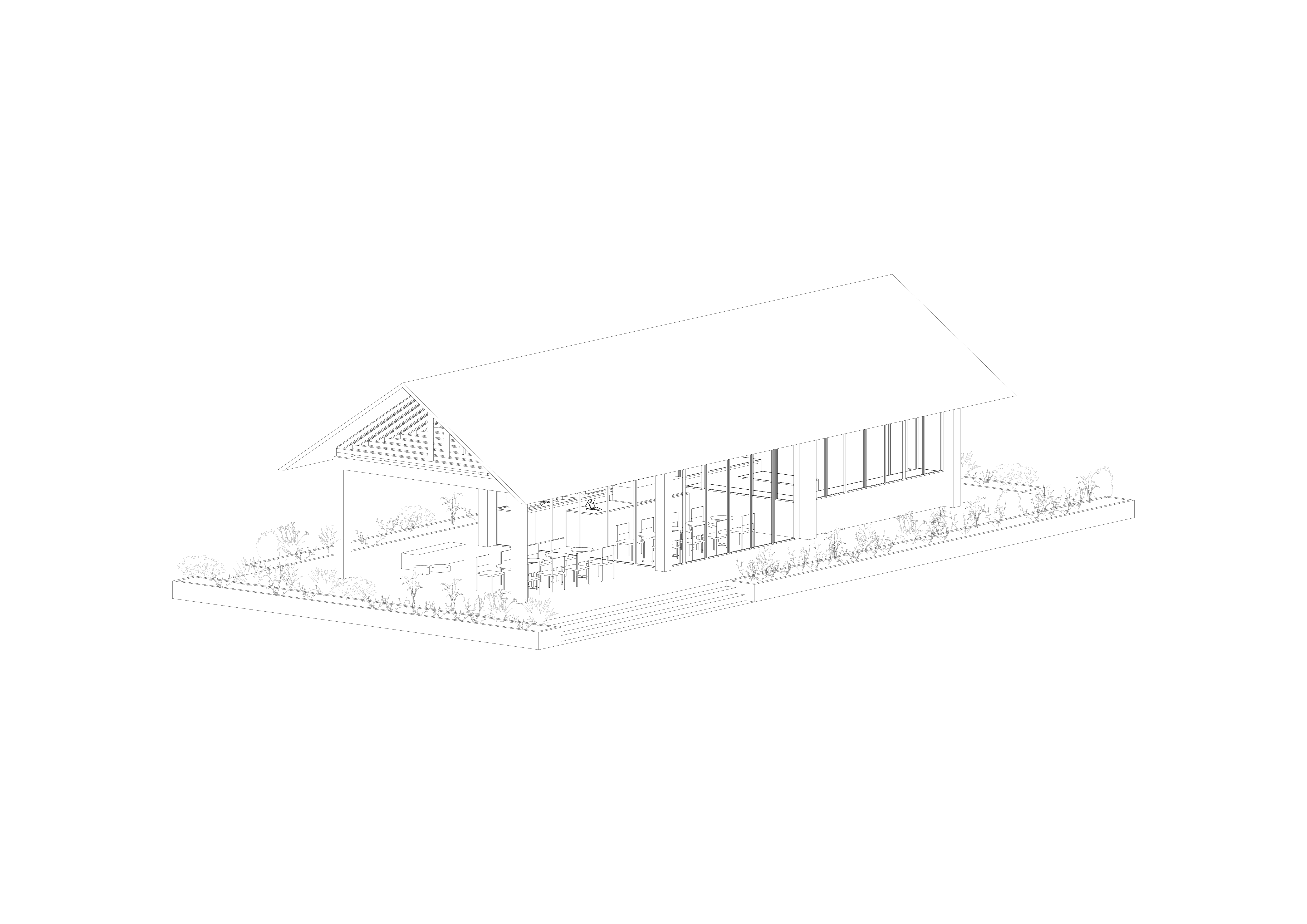
The project is conceived on a 45 cm elevated platform that lifts the building above ground level, creating a defined plaza surrounded by native planting.
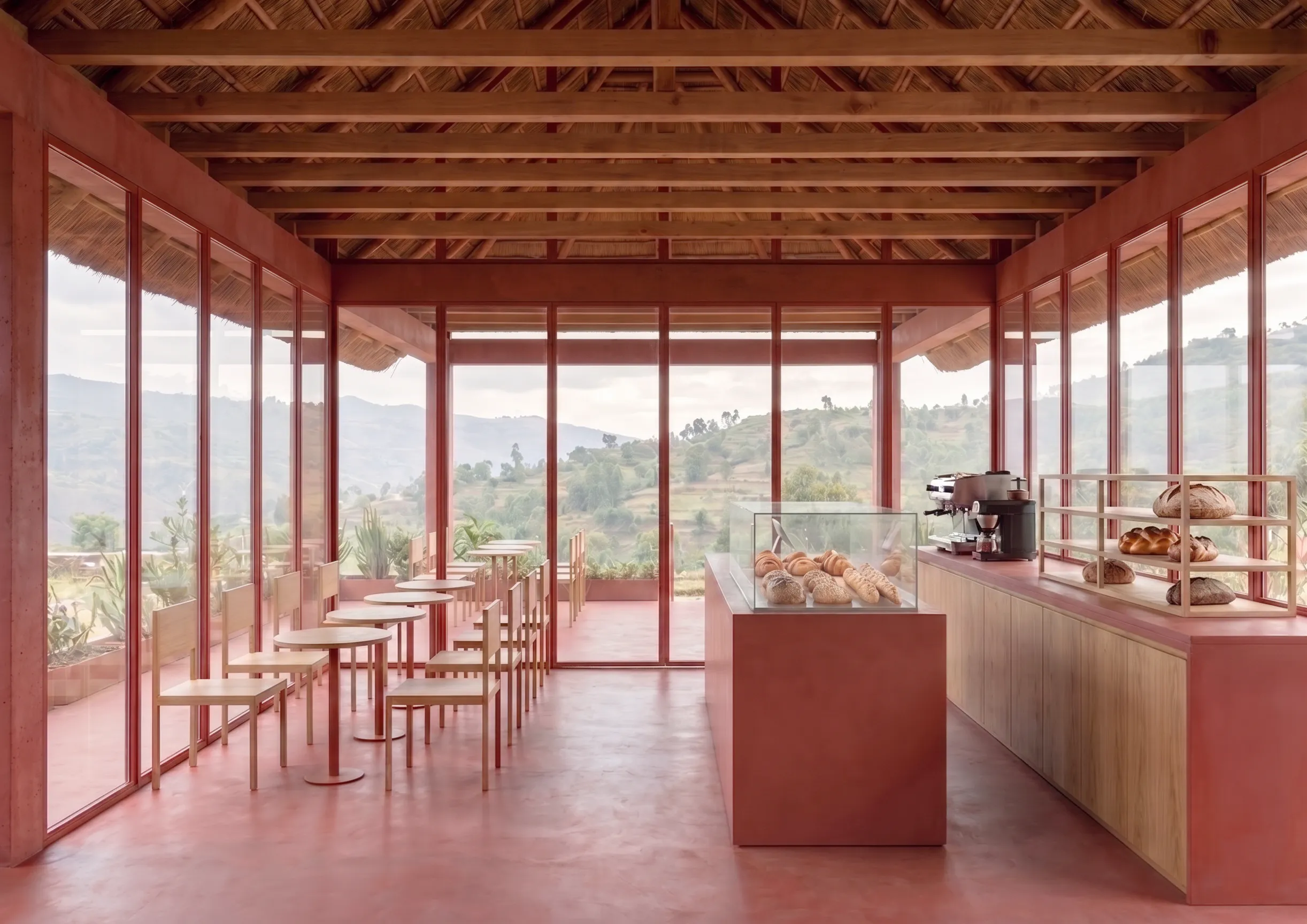
A reinforced concrete structure is set on this base. The concrete is pigmented red through the incorporation of mineral additives, referencing the tones of the local soil and the rock formations of Lalibela.
Above the concrete volume, a traditional Ethiopian thatched roof is installed, supported by a timber frame structure.
The interior is enclosed by glazed façades, with window frames finished in the same color as the pigmented concrete to ensure material and chromatic continuity.
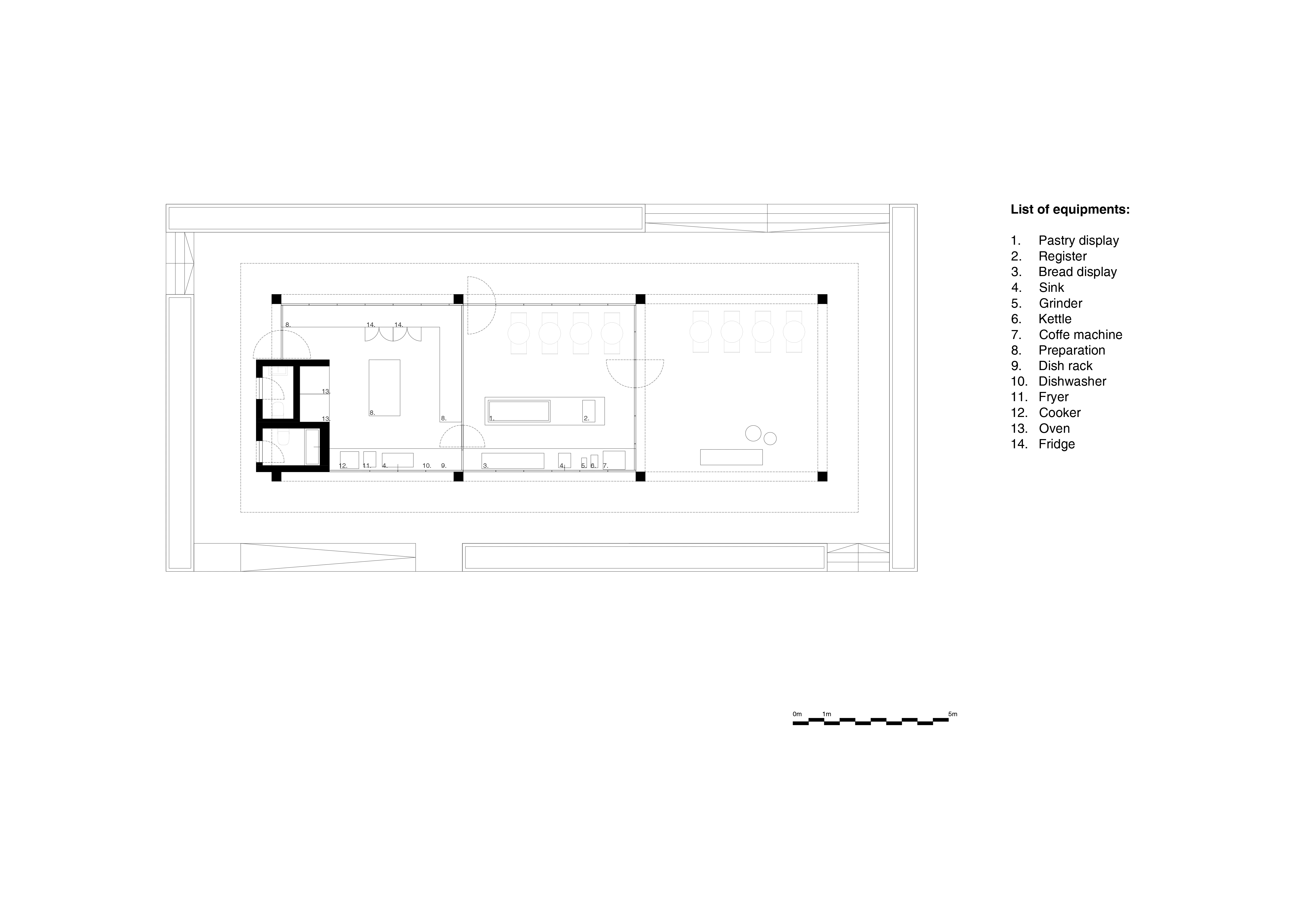
The pavilion is organized along its main axis into three functional areas.
The first area is an open-air space dedicated to informal service, furnished with wooden benches, tables, and chairs crafted by local artisans based on drawings provided by the Kirea design team.
The second area accommodates the main service and display counter, designed in concrete and steel, along with four tables and seating for customers.
The third area comprises the back-of-house functions, including a bakery kitchen, equipment and appliances, a central work island, and two restrooms.
The drawings illustrate the general concept of the project. They will be further developed into a detailed design, with potential adjustments to respond to the specific dimensions and characteristics of the site once acquired, as well as to align with the finalized budget.
Scroll to read more