Coffee as a Ritual of Hospitality in Ethiopia
Coffee as a Ritual of Hospitality in Ethiopia
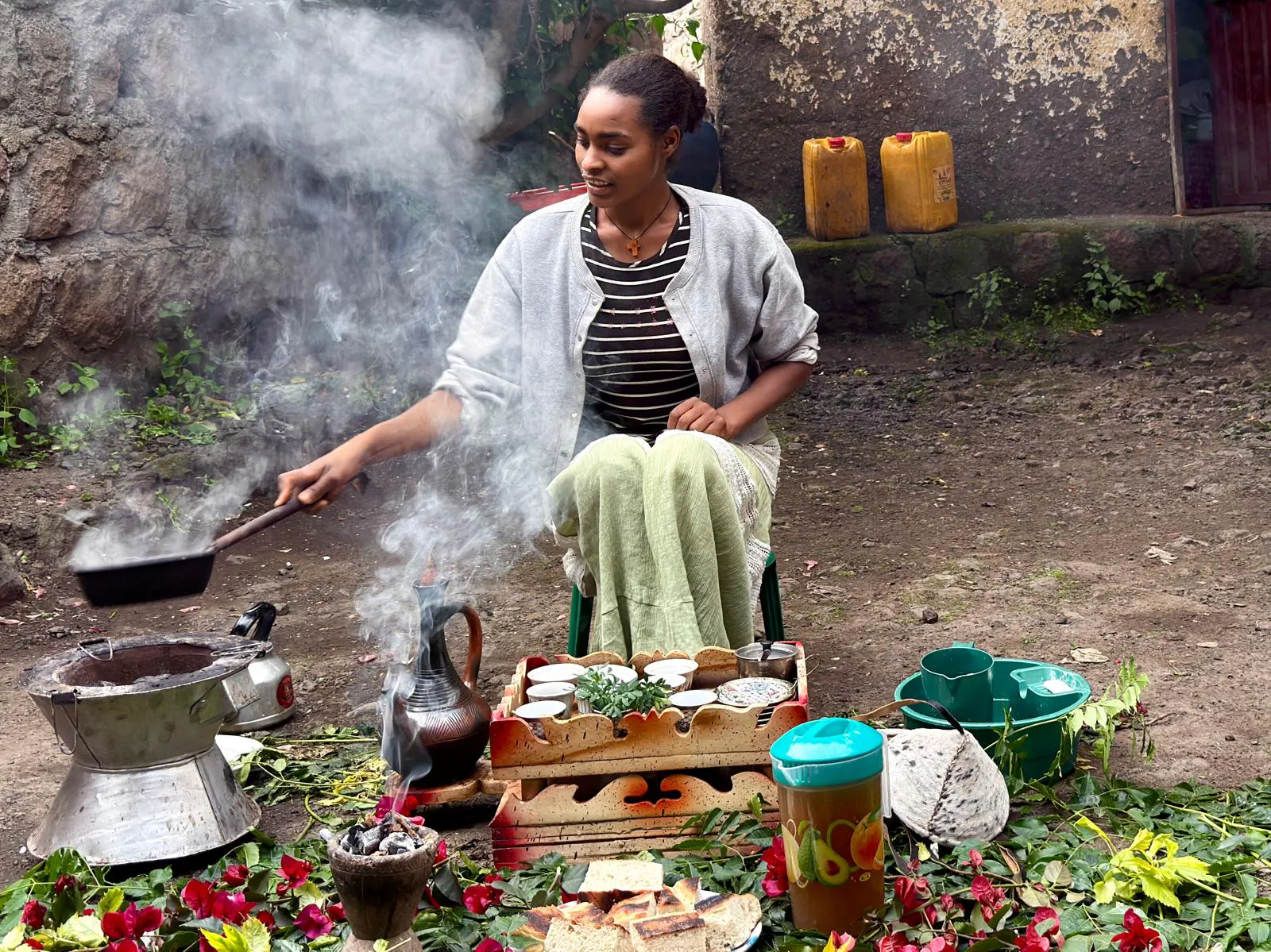
Encounters with others, whether with someone new or a familiar face, almost always begin with a ritual. Often without even realizing it, we welcome new people, guests in our spaces, by following gestures and sequences that together form a ritual event. For an event to be considered a ritual, it does not need to be theatrical, lavish, or extravagant; rather, rituality is defined by deliberate actions, carried out with intention and imbued with meaning. In this sense, even offering someone a cup of coffee can go beyond simple kindness or hospitality: in Ethiopia, the “birthplace” of coffee, the buna ceremony holds deep cultural and historical significance for anyone who lives in or passes through these lands.
There are several Ethiopian legends surrounding the discovery of coffee, a plant that produces red berries containing the beans that have shaped a significant part of global history and economy. The most well-known, however, is the story of the shepherd Kaldi. According to the legend, one day Kaldi suddenly lost sight of his goats, only to find them nearby, energetically jumping around after eating red berries from a bush. Curious, Kaldi tasted the berries himself and felt a surge of energy. He then decided to bring the fruits to monks in a nearby monastery, who, quite by chance, came up with the idea of roasting the fragrant beans, enabling them to better sustain long hours of prayer and meditation.
Since then, coffee has become one of Ethiopia’s defining symbols. It is consumed regularly and plays a central role in the buna, a fundamental ritual in Ethiopian culture, performed on festive days and important occasions, such as welcoming a guest.
The ceremony, typically led by women, begins with the preparation of the space where it will take place. A ceremonial mat is laid out and covered with qétéma (fresh grass), and the utensils to be used are carefully arranged. Charcoal is lit in a small stove, and the rising smoke symbolizes good fortune and marks the official beginning of the ceremony. The coffee beans are then roasted, releasing an intensely fragrant aroma. Each guest, starting from the eldest to the youngest, is invited to inhale the scent as a sign of respect. By the time the youngest guest has taken in the aroma, the room is filled with an intoxicating fragrance, expressing the multisensory nature of the ritual.
The hostess then grinds the roasted beans and boils them with water in a jebena, the traditional coffee pot. Once the brew is ready, it is served to the guests at least three times, poured with great care into small cups, again from the eldest to the youngest. In this way, the coffee ritual becomes a moment of reflection, a prolonged pause to appreciate what the Earth and the hosts provide. It is a sensory experience that goes beyond taste, carrying the hope that the places welcoming the guest may be as deep and rich as the coffee itself.
Bibliography
Éloi Ficquet, Ethiopia, the Home of Coffee, UNESCO Courier, March 22, 2023
Metasebia E. Yoseph, A Culture of Coffee: Transmediating the Ethiopian Coffee Ceremony, Georgetown University, 2013
Alemu Abebe, The Coffee Legend, CODE Ethiopia, 2018